Chafing isn’t bad luck. It’s skin rubbing wet fabric until the top layer gives out — same thing that happens with a rope burn, just slower and stupider, because you did it to yourself on a Tuesday morning run. Sweat softens skin first, so the damage stacks fast: fine at the start line, raw by mile eight. Three things drive it — fabric, fit, moisture — and you pick all three before you ever leave the driveway.
Fabric Is the Biggest Lever
Cotton absorbs sweat instead of moving it. That sounds harmless until you’re twenty minutes into a run and the shirt has gone from dry to soaked to heavy, holding water against your skin the entire time. Wet fabric has more surface friction than dry fabric, and a heavier, saturated shirt drags across skin with every arm swing instead of gliding. That’s the entire mechanism behind the old “cotton kills” warning distance runners repeat to beginners — it’s not about temperature regulation alone, it’s also a direct chafing risk.
Synthetic wicking fabric — polyester, nylon, or a blend — behaves differently. Instead of soaking up sweat, it pulls moisture off the skin through capillary action and spreads it across the outer surface of the fabric, where it evaporates. The shirt stays lighter, drier against the skin, and slides rather than drags. That’s the actual physics behind why moisture-wicking gear reduces chafing, not just why it “feels more athletic.”
Fit Matters as Much as Fabric
Both loose and tight clothing cause chafing, just in different ways. A shirt that’s too loose flaps and rubs with every stride, creating friction from movement alone even in dry conditions. A shirt that’s too tight presses fabric hard against skin at every seam and edge, concentrating friction in one spot instead of spreading it. The comfortable middle — a regular or athletic fit that moves with your body without excess fabric bunching under a pack strap or armpit — is the actual target, not “as tight as possible” or “loose so it breathes.”
Seam placement is the other half of fit. Side seams and underarm seams that sit right where your arm swings against your torso are a common, specific chafe point — worth checking on any shirt before you commit to it for a long run, not just glancing at the size tag.
What Actually Stops It Mid-Run
- Anti-chafe balm or stick: applied before you start, to known trouble spots — underarms, nipples, waistband, inner thighs. This is the fastest fix and works regardless of what you’re wearing.
- Dry, wicking fabric over cotton: the single biggest gear change for anyone chafing regularly on runs over 30-40 minutes.
- A fit that matches the run, not the mirror: a slightly closer fit for long runs reduces the flapping-fabric friction that builds over hours, even if a looser cut feels more comfortable standing still.
- Retiring old gear: repeated washing breaks down fabric finish over time, and an old shirt that used to be fine can start chafing again as the fabric degrades.
The Spots That Chafe Most, and Why
Chafing isn’t evenly distributed across the body — it clusters at a handful of predictable spots, each for a slightly different reason.
- Underarms: constant fabric-on-skin contact with every arm swing, worse with a looser sleeve that shifts rather than moving with your arm.
- Nipples: a small, raised point of contact against a moving shirt front — disproportionately common on longer runs regardless of gender, which is why some runners tape this spot specifically even when wearing wicking gear.
- Waistband: where a shirt hem or short waistband sits against skin for the entire run, often worsened by a hydration belt or pack strap adding pressure on top of the fabric.
- Inner thighs: skin-on-skin friction more than fabric-on-skin, which is why shorts length and fabric matter here as much as shirt choice.
- Bra line and shoulder straps: repeated strap movement against skin, especially once a shirt or sports bra is sweat-soaked and heavier than it started.
Tape and Barrier Products, If Balm Isn’t Enough
For chronic problem spots that balm alone doesn’t fully solve — nipples are the most common example — a small piece of athletic tape or a purpose-made adhesive patch creates a physical barrier that outlasts a balm on a long, sweaty effort. It’s a low-cost, low-effort addition worth trying before assuming you need to change gear entirely, and it works regardless of what shirt you’re wearing that day.
Don’t Race in Anything New
A shirt that’s never chafed you on training runs can still chafe on race day, simply because race-day sweat volume, duration, and conditions are often more extreme than a normal training run. The standard advice — nothing new on race day — exists specifically because of this. Test any new shirt on a run at least as long and as hot as the race before trusting it at the start line.
Humidity Makes Everything Worse
Sweat evaporates more slowly in high humidity, which means fabric stays wetter for longer even if you’re not sweating any more than usual on a dry day. That extended wet-fabric contact time is why the same shirt that’s fine on a dry 85-degree run can chafe on a humid 80-degree one — it’s not really about temperature, it’s about how long the fabric stays saturated against skin. Wicking fabric’s advantage over cotton gets more pronounced, not less, as humidity climbs, since evaporation is already working against you and moving moisture to a wider surface area matters more when it’s not evaporating as fast on its own.
Long Sleeves vs. Short Sleeves for Chafing
Sleeve length changes where chafing shows up rather than eliminating it. A long sleeve removes bare-arm-on-shirt-hem friction at the shoulder but introduces a new potential friction point at the wrist and forearm, especially where a cuff sits snugly against skin for the full run. Short sleeves avoid that but leave the underarm seam as the dominant risk point discussed above. Neither is strictly better for chafing — it’s a question of which specific friction point you’re more prone to, which usually only becomes clear after a few runs in each.
Should You Size Up to Avoid Chafing?
It’s a common instinct, but sizing up usually trades one problem for another rather than solving it. A shirt one size larger gives more room under the arms, which helps at that specific spot, but the extra fabric elsewhere flaps more with each stride, creating new friction where the fit was previously fine. The better fix, in most cases, isn’t a different size in the same cut — it’s checking whether a brand offers a fit specifically built for the sport (a running-specific cut tends to place seams and fabric differently than a general athletic tee) before assuming the size itself is the problem.
After the Run
Staying in a sweat-soaked shirt after you finish extends the damage — the friction stops, but the irritated skin is still sitting in salt and moisture. Get out of wet gear and rinse off promptly rather than lingering in it, and pat irritated areas dry instead of rubbing them, which just reopens the same friction that caused the problem.
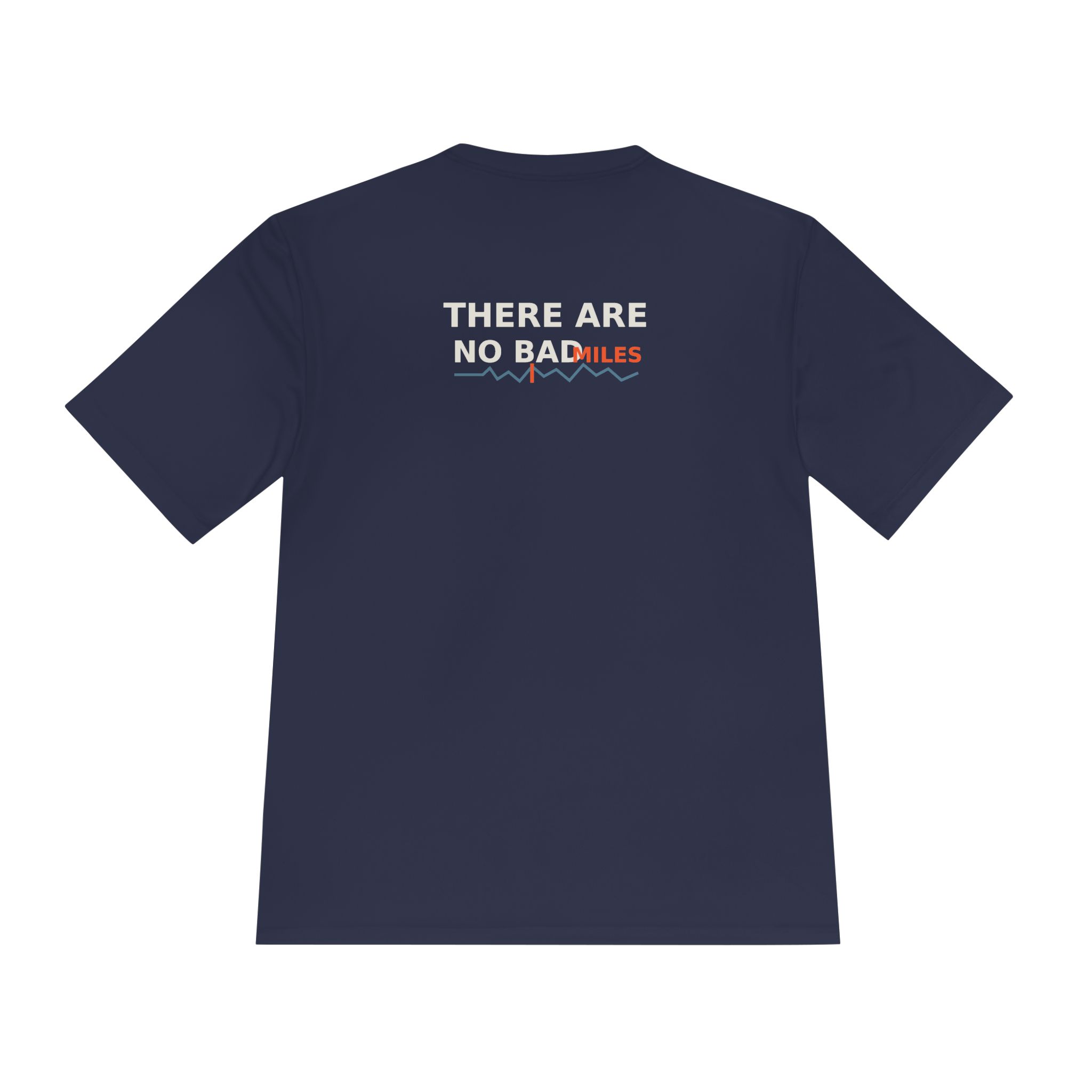
If you’re shopping specifically for a wicking shirt built to reduce this, the No Bad Miles Tee is an extra-light 3.8 oz/yd² 100% polyester in a regular fit with set-in sleeves and side seams — built to move moisture off the skin rather than hold it, which is the actual mechanism that matters here.
Deodorant Can Be Part of the Problem
Nobody thinks to blame deodorant, but a heavy antiperspirant layer under a synthetic shirt can gum up the exact spot that’s already taking the most friction. It builds up on fabric over repeated wears, stiffens the weave slightly, and adds one more variable rubbing against irritated skin. Doesn’t mean skip it — just wipe it thin before you get dressed instead of caking it on, and if underarm chafing keeps coming back no matter what shirt you’re wearing, that’s worth ruling out before you blame the gear. Same logic applies to sunscreen on the shoulders and upper back if you’re wearing a shirt over it — a thick, un-rubbed-in layer under fabric behaves the same way.
Bottom Line
Balm on the trouble spots before you start. Synthetic over cotton past thirty minutes. Nothing new on race day, ever, no matter how good it looked on the hanger. Get those three right and most chafing problems go away on their own — the rest is just paying attention to which spot keeps coming back and dealing with that one specifically.
FAQ
Is chafing worse in hot weather or cold weather?
Hot, usually — more sweat, more friction. Cold-weather chafing is a real thing too, but it’s layers rubbing each other, not moisture doing the damage.
How long until chafed skin heals up?
Two to four days if you keep it clean and dry. If the skin’s actually broken or it’s not getting better, that’s a doctor visit, not something to run through.