If you’re overheating badly on a hot run, it’s rarely actually a fitness problem. It’s a clothing problem, and clothing’s the one variable you actually control before you leave the house. Fabric, weight, fit, color — pick wrong on any of those and you’re fighting your own outfit for ten miles. Here’s what to get right, ranked by how much it actually matters.
Fabric Weight Matters More Than People Think
Running shirts aren’t all the same weight, even within “technical” fabric. Weight is usually listed in ounces per square yard (oz/yd²), and for hot-weather running, lighter is almost always better — less fabric means less insulation trapping body heat and less material to get saturated with sweat. A shirt in the 3-4 oz/yd² range is built specifically for hot, high-output conditions; heavier fabric in the 5-6+ oz range is aimed more at cool-weather training or general athleisure than serious summer mileage.
This is also where our cotton vs. synthetic breakdown comes back in directly — fabric type and fabric weight are two separate variables that both need to be right for hot weather. A lightweight cotton shirt is still cotton; it’ll still absorb sweat and get heavy, just slightly less heavy than a thick cotton hoodie would.
Fit: Loose Isn’t Always Cooler
There’s a common assumption that loose clothing is automatically cooler because “it breathes more.” That’s only partly true. A slightly loose fit does allow more air movement against skin, which helps evaporative cooling. But too loose, and fabric traps a layer of still, humid air against your body instead of letting a breeze move through — and it adds unnecessary flapping-fabric friction on long runs (see our chafing guide). A regular or athletic fit that skims the body without clinging tends to outperform both extremes.
Color: Not Just Aesthetic
Dark colors absorb more solar radiation and convert it to heat; light colors reflect more of it. On an overcast run or before sunrise, color makes little practical difference. On a direct-sun midday run, a light-colored shirt genuinely runs cooler against the skin than a dark one made from the identical fabric — a real, measurable effect, not just a comfort placebo.
Layering for Predawn Starts That Heat Up Fast
Summer race mornings and early long runs often start cool and finish hot, which trips people into overdressing at the start line. The fix isn’t complicated: start slightly cool rather than comfortable, since you’ll warm up within the first mile regardless, and if you do need an extra layer at the start, make it something easy to tie around your waist or ditch at an aid station rather than something you’re stuck wearing for the whole run.
Below the Waist Matters Too
Shirt fabric gets most of the attention, but shorts follow the same rules — lightweight synthetic over cotton, a fit that doesn’t bunch under a hydration belt, and the same chafing risks at the inner thigh and waistband covered in our chafing guide. Compression shorts add another variable: they can reduce thigh-on-thigh friction, but the tighter fit also traps slightly more heat against skin than a looser short, so they’re a genuine tradeoff rather than a strict upgrade in hot weather.
Gear You’re Carrying Adds Heat
A hydration vest or belt, especially one loaded with bottles or a bladder, adds an insulating layer against your back or waist exactly where you’re trying to shed heat. On genuinely hot long runs, a handheld bottle or minimal waist belt sheds less trapped heat than a full vest — worth weighing against how much fluid you actually need to carry versus how much heat-trapping you’re willing to accept for the convenience. Where possible, mesh-backed or minimalist vest designs reduce this effect somewhat compared to a solid-backed pack, though the tradeoff never fully disappears — more carried weight and surface contact always means more trapped heat than carrying nothing at all. It’s an easy variable to overlook when troubleshooting why a hot run felt worse than expected, since attention usually goes straight to shirt fabric and skips the pack entirely.
Acclimatization Changes What “Hot” Feels Like
Clothing choices matter more before your body has adapted to heat than after. Heat acclimatization — typically building over 10-14 days of consistent exposure — measurably improves sweat rate efficiency and reduces core temperature at a given effort, meaning the same shirt and the same pace will feel considerably more manageable a few weeks into a hot training block than it did on the first 90-degree run of the season. Dress more conservatively (lighter, less coverage) during that early adjustment window specifically, and expect to need it again after any extended break from heat — a week of cooler travel or an injury layoff can meaningfully reset acclimatization built up over the prior weeks.
Heat Index Matters More Than the Thermometer
Air temperature alone undersells how hard a run will actually feel. Heat index, which factors in humidity, can push the “real feel” well above the actual air temperature — a 78-degree, high-humidity morning can feel and physiologically tax you closer to what a dry 88-degree run would. That’s a direct callback to the humidity issue in our chafing guide: humid heat is genuinely harder on both comfort and skin than dry heat at the same number on the thermometer, and clothing choices should scale with heat index, not just temperature.
Headwear: Hat, Visor, or Nothing
A full hat traps heat at the one place your body sheds the most of it — the head — which is why some runners prefer a visor (shade without full coverage) or nothing at all on the hottest days, reserving a hat for direct, prolonged sun exposure where the shade benefit outweighs the heat-trapping cost. A lightweight, breathable running hat with mesh paneling splits the difference better than a cotton or heavy cap, following the same fabric logic as the rest of the outfit. Light color applies here too — a white or pale visor reflects more heat than a black one, which matters more than most runners assume given how directly headwear sits against skin.
Socks Follow the Same Rules as Everything Else
Cotton socks in hot weather cause the exact same problem as a cotton shirt, just concentrated in a smaller, harder-working area — feet sweat heavily on a hot run, and cotton holds that moisture against skin instead of moving it away, which is a direct contributor to blisters, not just discomfort. A synthetic or wool-blend running sock, the same fabric logic covered throughout this guide, meaningfully reduces that risk on long, hot efforts where feet are under sustained load for hours.
Hydration Habits Change What Clothing Can Do For You
The best shirt in the world doesn’t fix under-hydration. Clothing manages how efficiently your body sheds heat — it doesn’t create the water your sweat glands need to do that shedding in the first place. Show up to a hot run already behind on fluids and no fabric choice saves you from overheating faster than someone who drank properly beforehand. This isn’t a reason to obsess over hydration mid-run — it’s a reason to get it right the day before and the morning of, so the gear actually has something to work with.
Fabric Doesn’t Replace Pacing on the Worst Days
There’s a ceiling to what clothing buys you, and it’s worth saying plainly: on the genuinely brutal days, the right move is slower, not just better-dressed. A perfect kit at race pace in dangerous heat still ends badly. Dress right, then also actually adjust effort — the two aren’t substitutes for each other, they stack. Ego’s the thing that usually gets in the way here, not knowledge — everyone already knows to slow down in heat, fewer people actually do it, especially mid-race with a goal time stuck in their head and a finish line still a few miles out.
Bottom Line
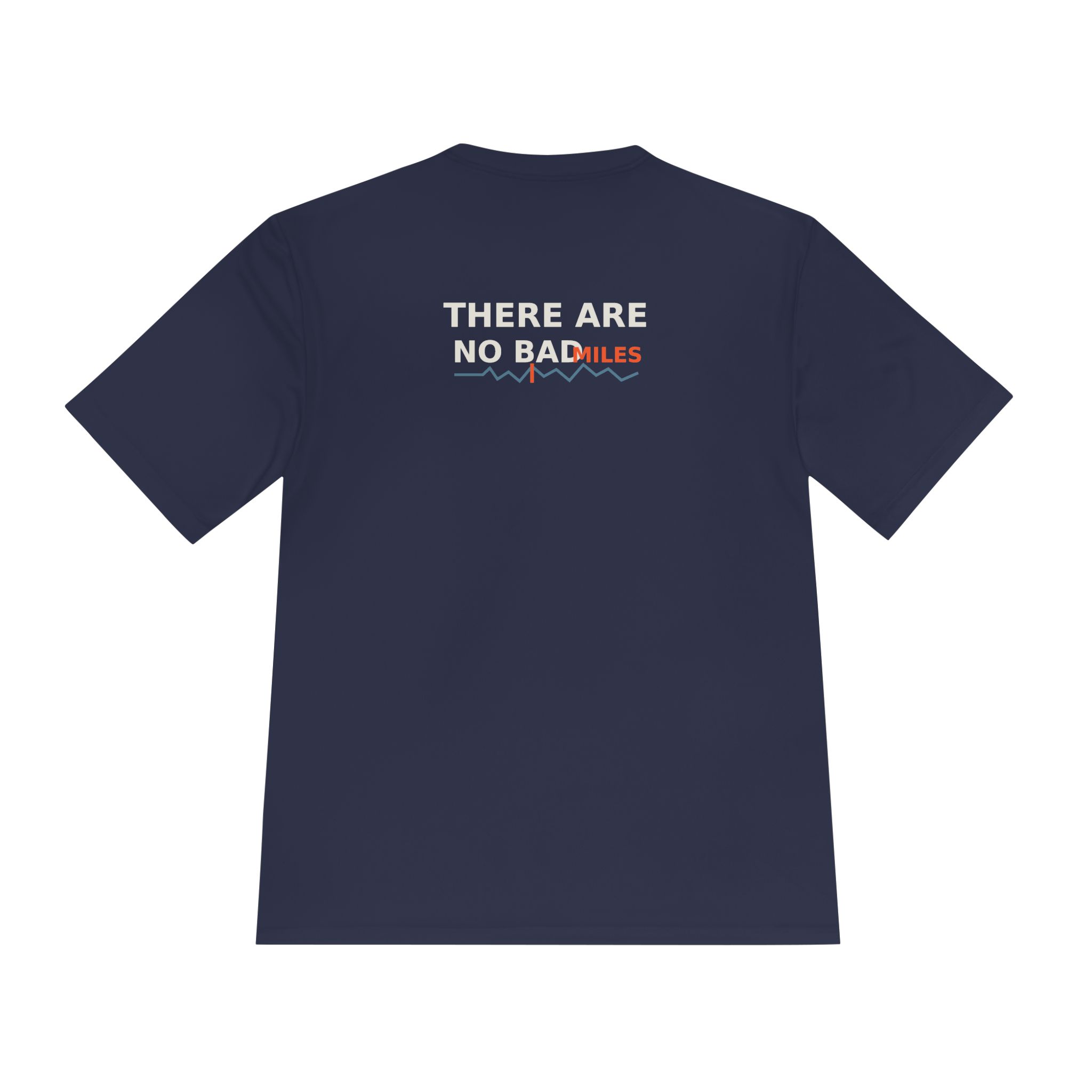
Synthetic, light, regular fit, pale color if the sun’s out — that’s the whole formula. The No Bad Miles Tee hits all four at 3.8 oz/yd², and it’s cut regular instead of race-singlet tight, which some people find easier to actually run in day to day. And none of this replaces common sense — clothing buys you margin on a hot day, it doesn’t buy you immunity. Dizzy, confused, or you’ve stopped sweating despite feeling cooked? Stop. Doesn’t matter how far in you are or how good the shirt is.
One Last Thing
None of this is complicated once you’ve dialed it in once. Light fabric, right fit, pale color, and actually paying attention to how you feel instead of what the watch says — that’s the whole system, and it holds up on every hot morning after the first one you get right.
FAQ
Should I just run shirtless when it’s really hot?
Not necessarily — a light, light-colored wicking shirt can run cooler than bare skin, since it blocks some sun while sweat still evaporates through it. Bare skin’s got zero sun protection.
Does color actually matter that much, or is fabric type the whole story?
Fabric matters more, but color’s a real second factor in direct sun — the two stack, so light-colored synthetic beats dark-colored synthetic on a bright day.