Hours of daily listening means hours of direct skin contact — ear pads absorb sweat, skin oil, and dust faster than most people expect, and cleaning them wrong can do more damage than not cleaning them at all.
The Basic Method
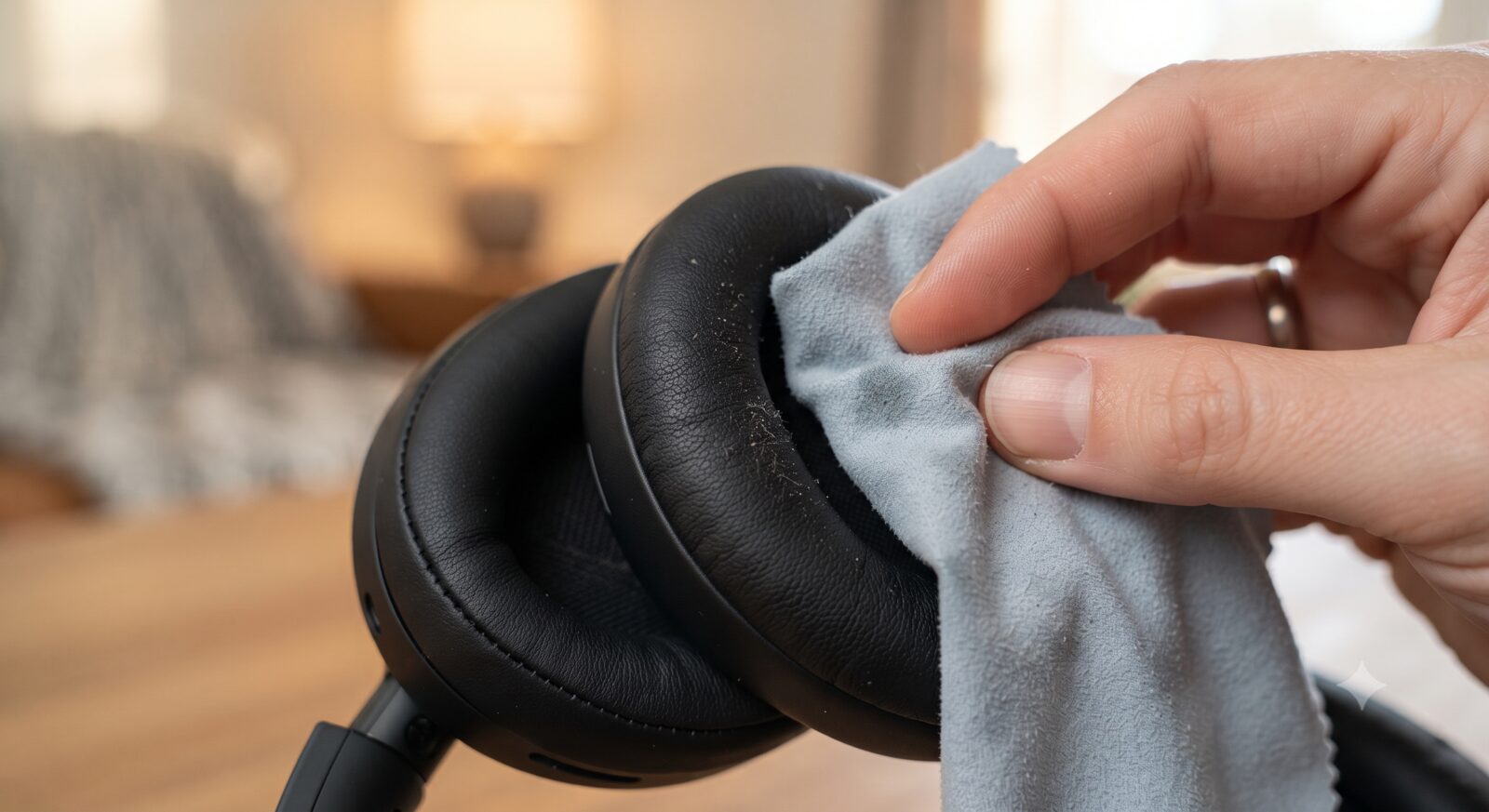
Dampen a clean microfiber cloth with mild soapy water and wring it out until it’s barely damp, not wet — excess moisture is the single biggest risk to the foam underneath the pad material. Work the cloth in small circular motions over both the front and back of each cushion to lift dirt and oil buildup, then set the pads aside to air dry completely before using the headphones again.
Material Changes the Method
- Leather and synthetic leather (protein leather): Use the minimum water possible — a barely-damp cloth, never a soaked one. These materials can also benefit from a leather conditioner up to twice a year, but more frequent conditioning tends to do more harm than good.
- Fabric or velour pads: Brush off loose dust first with a soft-bristled brush, then follow with a lightly damp cloth and mild soap. Skip alcohol-based cleaners entirely on fabric — they break down the material faster than regular soap and water.
What Actually Damages Ear Pads
Alcohol wipes are the most common self-inflicted damage on leatherette and protein-leather pads — they strip the surface finish and noticeably speed up cracking and peeling, even though they seem like an obvious “disinfecting” choice. Soaking pads, using harsh household cleaners, or trying to speed up drying with a hair dryer or direct heat all risk breaking down the foam structure underneath, leading to the same cracked, peeling, shiny-surface look that alcohol causes — just from a different mechanism.
Why Some Pads Wear Out Faster Than Others: Foam Type
The foam underneath the pad surface matters as much as the surface material itself. Standard open-cell polyurethane foam — common in budget headphones — is soft and breathable but has a comparatively short lifespan, often visibly compressing or breaking down within 3-6 months of regular use. Memory foam, the type used across Marshall’s over-ear lineup and most mid-range-and-up headphones, is slower to break down and holds its shape longer, which is a real part of why it’s become the standard for anything meant for daily multi-hour listening rather than occasional use. Closed-cell foam trades some of that breathability for more durability and better passive noise isolation, which is why it shows up more in studio and travel headphones than in headphones built for long stretches against warm skin. None of this changes the cleaning method above, but it’s useful context for telling normal foam fatigue apart from a cleaning mistake — and replacement pads, a five-minute swap on most models, are the actual fix once foam has genuinely broken down, not something cleaning can reverse.
A Simple Habit That Reduces How Often You Need to Deep Clean
Wiping pads down with a dry cloth immediately after taking the headphones off — before sweat and oils have time to absorb into the material — meaningfully cuts down how often a full wet cleaning is actually needed. For daily desk use, a full clean every two to three weeks is typically enough; for exercise or shared use, weekly is more appropriate given the heavier buildup. This is also worth doing as routine maintenance if you’re managing recurring irritation, alongside the fixes covered in our guide to why headphones hurt your ears during long sessions — buildup on dirty pads is a real contributing factor to skin irritation that clamping-pressure fixes alone won’t solve.
This matters most on the memory-foam ear pads used across Marshall’s over-ear lineup, where excess moisture is the fastest way to shorten a pad’s life. If yours have already reached the cracking-and-peeling stage that cleaning alone can’t undo, our Marshall Headphones review covers the current models and what to expect if you’re weighing a replacement pair against just sourcing new pads.
Frequently Asked Questions
Can I put ear pads in the washing machine?
No — washing machines apply far more water and agitation than the foam and adhesive construction of ear pads can handle. Hand cleaning with a barely-damp cloth is the only method that won’t risk delaminating the pad or damaging the foam.
Why do leather ear pads start peeling even with regular cleaning?
Often it’s the cleaning method itself — alcohol-based wipes and over-conditioning are common causes of the exact peeling people are trying to prevent. Switching to a barely-damp soapy cloth and conditioning at most twice a year usually slows this down significantly.
How do I know when ear pads need replacing instead of cleaning?
Cracking, visible foam through torn material, or a permanently flattened cushion that no longer springs back are signs cleaning won’t fix — at that point replacement pads (widely available for most popular headphone models) are the actual solution.