This page contains affiliate links. If you make a purchase through one, we may earn a commission at no extra cost to you.
Most advice about “getting more out of audiobooks” focuses on playback speed and app features. That’s real, but it’s a small part of the picture — the bigger gains come from matching your gear and format choices to how you actually listen, which is exactly the ground we’ve covered across this site. This page pulls those pieces together into one practical setup. If you already know your gear needs an upgrade, see current Marshall headphone options — otherwise, start with the listening-pattern breakdown below.
Start With How and Where You Actually Listen
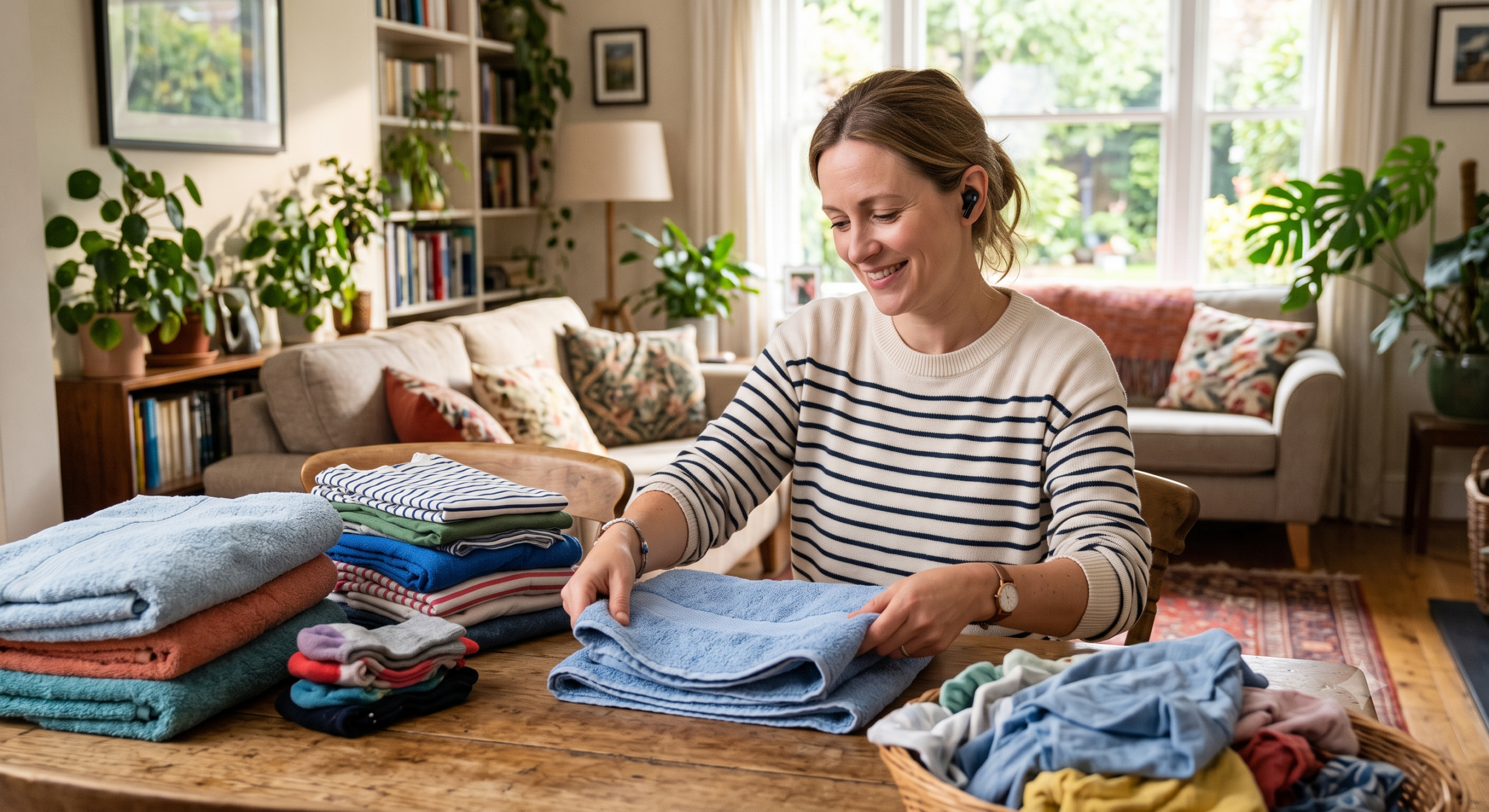
Before picking headphones or a format, be honest about your actual listening pattern, not an idealized one. Do you listen mostly at home, alone, with time to give it full attention? Or mostly during a commute, workout, or chores, where your attention is split and your environment is noisy? These aren’t just headphone-shopping questions — they should drive your format choice too.
- Quiet, focused home listening: open-back headphones (see Open-Back vs. Closed-Back) and dramatized full-cast productions (see What Makes a Full-Cast Dramatized Audiobook Different) both reward the kind of undivided attention this environment allows.
- Noisy commute or travel: closed-back with active noise cancelling if you’re dealing with engine or transit rumble (see Noise-Cancelling vs. Passive Isolation), and standard single-narrator content that doesn’t demand full attention to follow.
- Background listening during chores or work: comfort and battery life matter more than any other spec (see Best Headphones for Audiobooks), and a denser dramatized production will likely compete for attention you don’t have to spare.

Match the Format to the Genre, Not Just the Mood
A genuinely underused trick: don’t lock yourself into one format for everything you listen to. Ensemble sci-fi or fantasy with a large cast is where full-cast dramatization earns its price — distinct voice actors per character make multi-POV, dialogue-heavy books dramatically easier to follow than one narrator alone can manage. Literary fiction, memoir, and character-study novels, on the other hand, are frequently better served by a single skilled narrator’s more measured, interior delivery. Using both formats for what each does best — rather than committing entirely to one — gets you more out of your reading time than treating it as an either/or decision.
Playback Habits That Actually Help
- Speed up gradually, not all at once. Most people can comfortably work up to 1.2-1.5x over a few weeks of regular listening as their ear adjusts, versus jumping straight to 2x and finding it exhausting or hard to follow. Note that this applies to standard narration — dramatized productions with overlapping dialogue, music, and effects generally don’t hold up well above 1x, since the pacing is part of the produced experience.
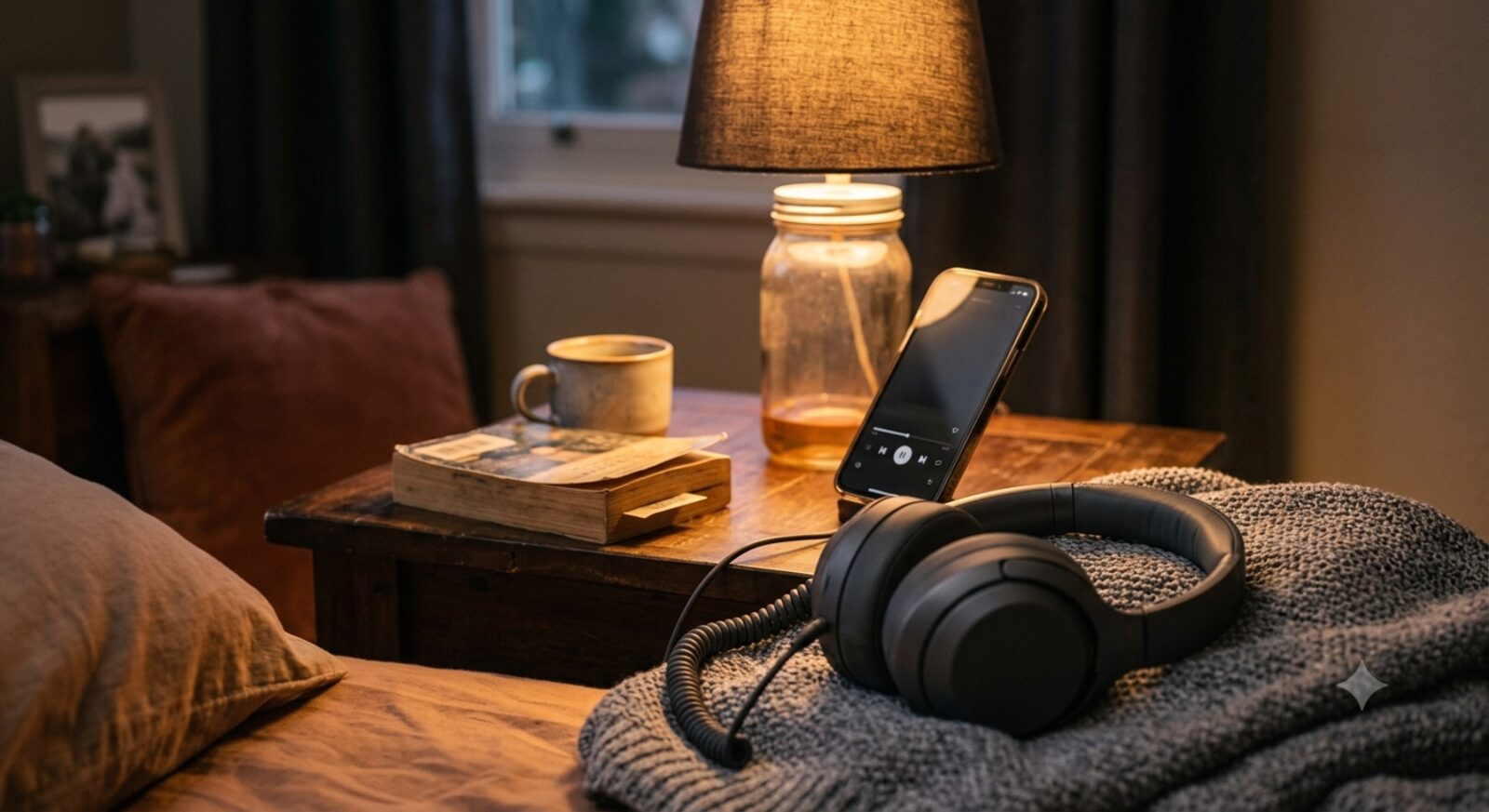
- Use sleep timers deliberately, not by accident. If you listen at bedtime, a 20-30 minute sleep timer prevents the common problem of waking up unsure how much of a chapter you actually absorbed versus slept through.
- Bookmark instead of relying on memory for return points when you’re switching between multiple titles — most apps support this, and it removes the friction of re-finding your place that otherwise discourages picking a book back up.
Protect Your Ears on Long Sessions
Marathon audiobook sessions raise a real, often-overlooked question: hearing health over cumulative hours, not just single-session volume. A rough, genuinely useful guideline is the 60/60 rule — no more than 60% volume for no more than 60 minutes at a stretch without a break. This matters more for audiobook listeners than the average music listener specifically because total weekly listening hours tend to run much higher — a daily commute plus evening listening adds up to real cumulative exposure across a week. Comfortable, well-fitting headphones (covered in depth in our Best Headphones for Audiobooks guide) also reduce the temptation to crank volume to compensate for a poor seal or fit.
Putting It Together
The short version: pick headphones suited to where you actually listen rather than a generic “best” list, match format to genre rather than defaulting to one or the other, build playback habits gradually rather than forcing them, and treat volume and session length as a real long-term consideration rather than an afterthought. None of this requires expensive gear — it requires matching the choices you’re already making to how you actually listen. See Marshall’s current headphone lineup or browse GraphicAudio’s catalog to put any of this into practice.
Frequently Asked Questions
What’s a reasonable audiobook listening speed to start at?
1.0x to 1.1x for anyone new to audiobooks or a specific narrator’s voice, increasing gradually as your ear adjusts to that narrator’s pacing and cadence. Jumping straight to a high speed with an unfamiliar narrator is the most common reason people say they “can’t get into” audiobooks.
Should I use one app for everything or split between platforms?
Splitting is genuinely fine and often necessary, since dramatized full-cast content and standard single-narrator audiobooks typically live on different platforms. The inconvenience of two apps is minor compared to picking the wrong format for a given book.
Does headphone quality actually affect comprehension?
Indirectly, yes — poor voice-frequency clarity or an uncomfortable fit that has you adjusting or removing headphones mid-chapter both interrupt the kind of sustained attention audiobooks require. It’s less about premium sound quality and more about removing friction that breaks your focus.