This page contains affiliate links. If you make a purchase through one, we may earn a commission at no extra cost to you.
If your ears hurt after a long audiobook or podcast session, it’s almost always one of four things: too much clamping pressure, heat and sweat buildup, headphones that are too heavy, or the volume set too high for too long. Here’s how to fix each one.
See the Marshall Major V and Monitor III A.N.C.
Too Much Clamping Force
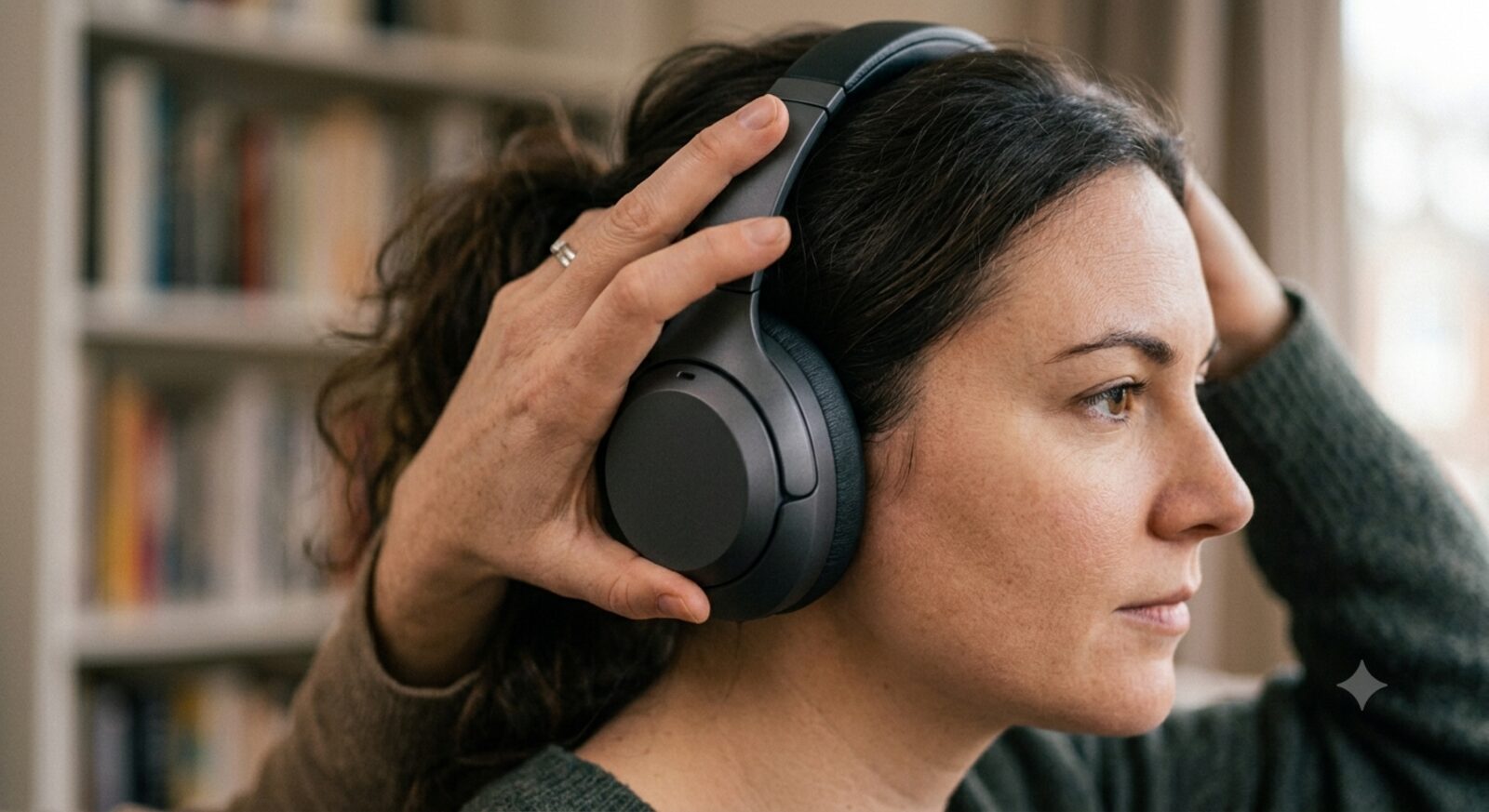
Headphones stay on your head by squeezing gently. If that squeeze is too strong, it presses directly on the cartilage of your ear, and that starts to hurt after 20 or 30 minutes. New headphones are often tighter than they need to be, since the headband hasn’t stretched in yet.
You can gently stretch most headband-style headphones by placing them over two books spread slightly wider than your head and leaving them overnight. Do this a little at a time and check the fit, rather than stretching it all at once.
Heat and Sweat Buildup
Ear cups trap warmth against your skin, and after an hour or two that heat turns into a sore, sweaty feeling rather than sharp pain. Taking the headphones off for five minutes every hour during a long listening session gives your ears a chance to cool down, and it makes a bigger difference than people expect.
Headphones That Are Too Heavy
Weight matters more for long sessions than it does for a quick 20-minute listen. A heavier over-ear headphone can start to feel like a strain on your head and neck after a while, even if it felt fine in the store for five minutes. This is exactly the kind of problem a lighter, on-ear design solves: the Marshall Major V is built to be light and foldable, specifically because it’s meant for exactly this use case, hours of audiobook or podcast listening rather than short sessions. As a rough guideline, anything under about 250g wears noticeably better past the two-hour mark than a 320g+ pair, even when the heavier pair sounds marginally better on paper — check the Major V’s actual weight and specs if that’s the source of your current discomfort.
Volume Set Too High for Too Long
This one isn’t just about comfort, it’s about protecting your hearing. Health and safety guidelines say it’s safe to listen at 85 decibels for up to 8 hours a day. For every 3 decibels louder than that, the safe listening time is cut in half. So at 88 decibels, the safe limit drops to 4 hours. At 91 decibels, it drops to 2 hours. Most people don’t know exactly how loud their headphones are set, but a simple rule of thumb works well: if you can’t hear someone talking normally next to you, it’s too loud.
Source: CDC/NIOSH guidance on hearing protection and safe noise exposure.
If It’s Actual Pain, Not Just Discomfort
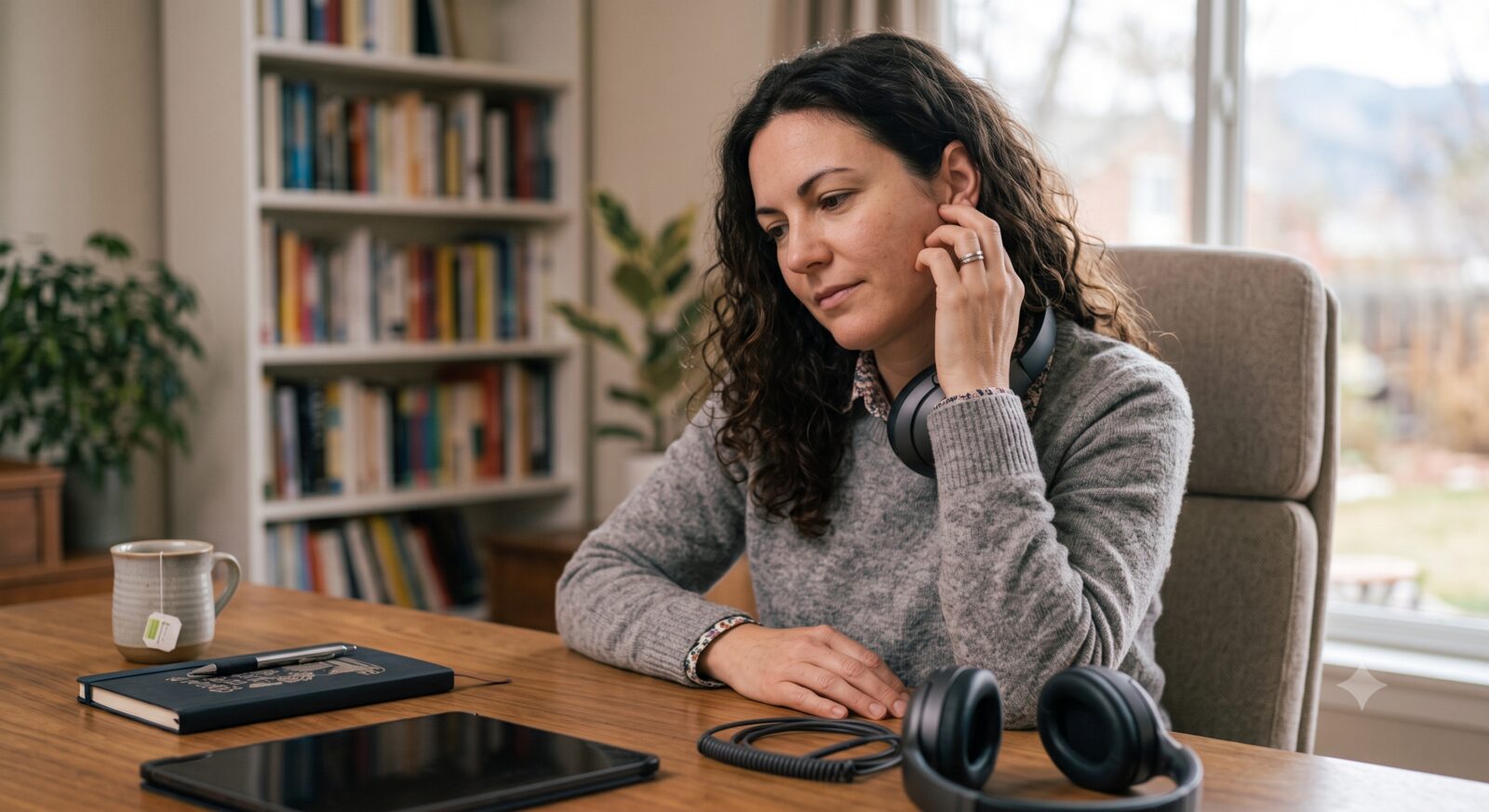
Mild soreness after a long session is normal and usually goes away quickly once you take the headphones off. Sharp pain, ringing in your ears, or pain that doesn’t go away after a few hours is different, and it’s worth stopping and giving your ears a real break rather than pushing through it. If pain or ringing continues for more than a day, it’s worth talking to a doctor rather than assuming it will resolve on its own. If the root cause turns out to be genuine hardware fit rather than a habit fix, our full Marshall Headphones Review and current model lineup cover the comfort tradeoffs between the two models in more depth.
Frequently Asked Questions
Are on-ear or over-ear headphones better for long sessions?
It depends on the person. On-ear headphones, like the Major V, tend to be lighter, which helps over many hours. Over-ear headphones, like the Monitor III A.N.C., spread pressure around the ear instead of on it, which some people find more comfortable, but they usually weigh more. Trying both is the only way to know which one your ears prefer.
Do earbuds hurt less than over-ear headphones?
Not necessarily. Earbuds avoid clamping pressure entirely, but they put pressure directly inside the ear canal instead, which some people find worse over a long session. It really comes down to your own ears and what shape fits you.
How often should I take breaks during a long audiobook?
A short break of a few minutes every hour is a reasonable habit for comfort. If you’re listening at a safe volume, you don’t need to stop for hearing-health reasons, but your ears will usually feel better with regular short breaks either way.