This page contains affiliate links. If you make a purchase through one, we may earn a commission at no extra cost to you.
Open-back and closed-back headphones aren’t a “budget vs. premium” split, and neither one is objectively better — they’re built around opposite tradeoffs, and the right choice depends entirely on where and how you actually listen. This is one of the oldest, most well-documented debates in headphone design, and it holds up because both sides of it are genuinely true. If you already know you need a closed-back pair, see Marshall’s current closed-back lineup — otherwise, here’s what actually separates the two designs.
What the Terms Actually Mean
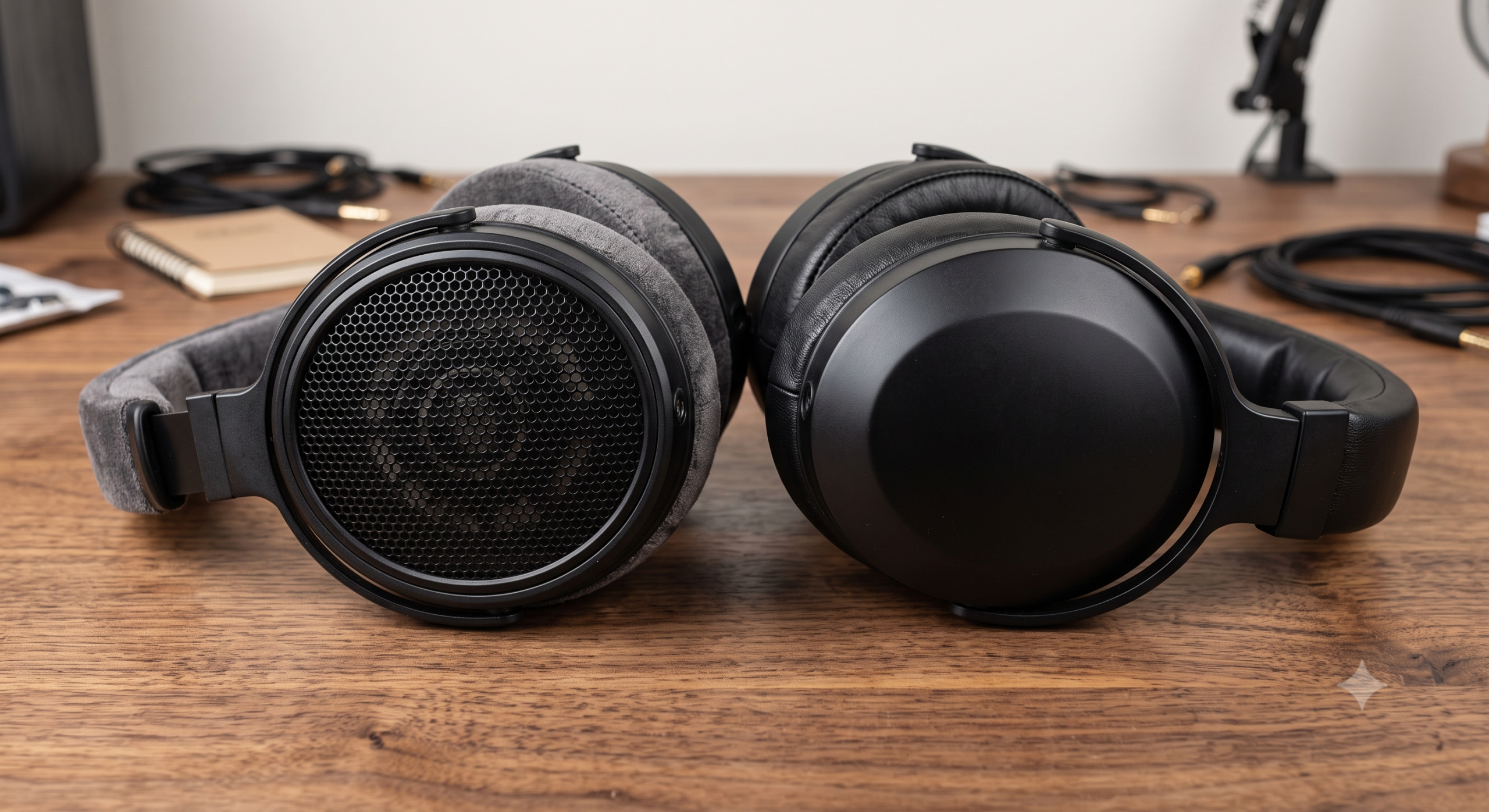
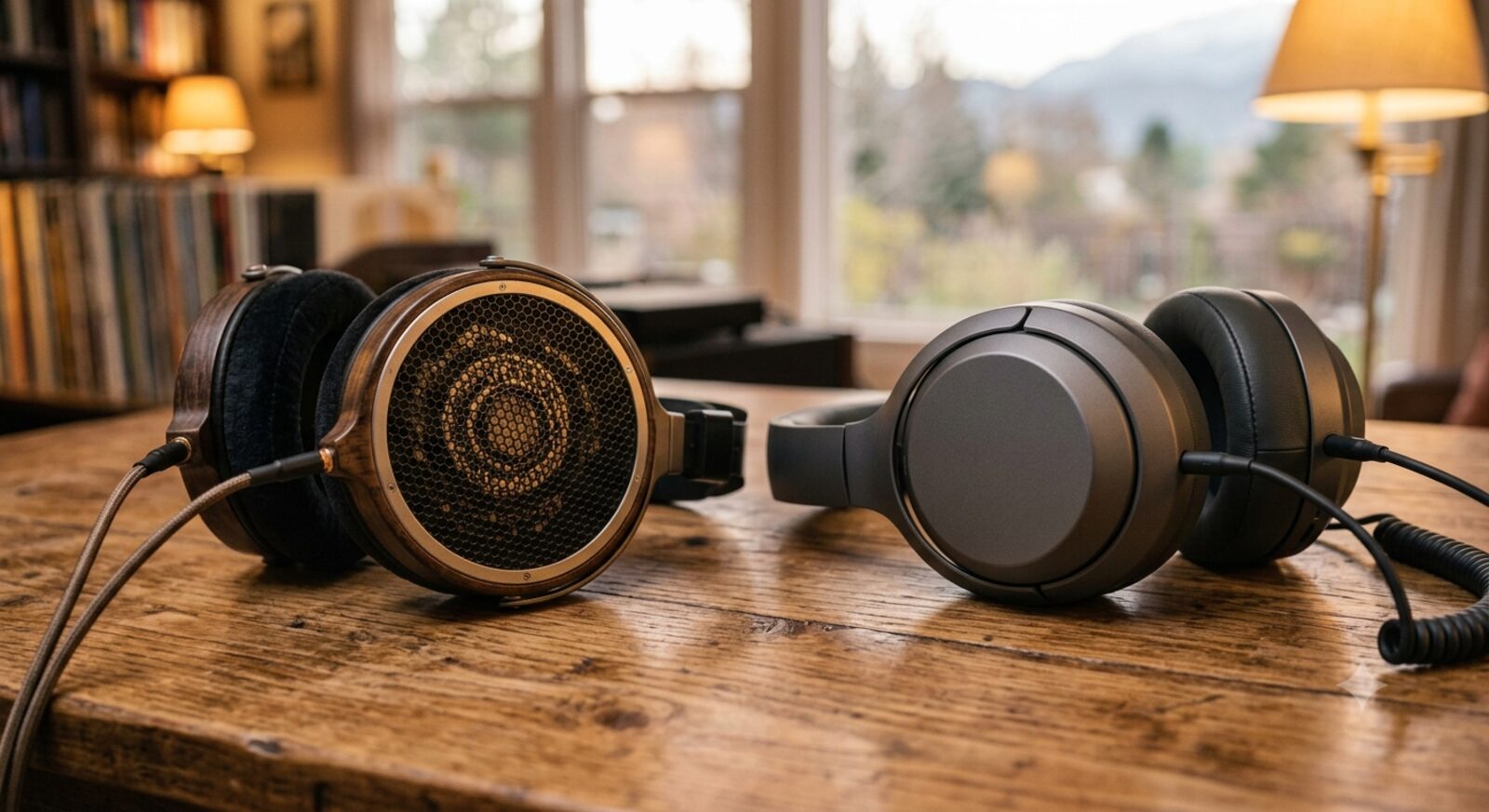
The difference is physical: closed-back ear cups have a sealed outer housing, while open-back ear cups have a perforated or mesh housing that lets air — and sound — pass through freely. That single design choice cascades into almost every other difference between the two.
Open-Back: Wider Soundstage, Zero Isolation
Because sound passes freely through the housing, open-back headphones don’t create the same pressurized, boxed-in cavity that closed designs do. The practical effect is a soundstage that feels more like listening to speakers in a room than sound arriving from two fixed points — more natural spatial placement, less of the “sound is coming from inside your skull” sensation. They also run cooler over long sessions since heat and moisture escape through the housing instead of building up against your ears.
The tradeoff is total: open-back headphones isolate essentially nothing. You’ll hear your room, and your room will hear you — at moderate-to-loud volumes, someone sitting near you can often make out what you’re listening to. That makes them a poor fit for shared offices, transit, or anywhere you need external awareness blocked out.

Closed-Back: Isolation and Contained Bass
A sealed housing does two things: it blocks a meaningful amount of external noise (passive isolation, distinct from active noise cancelling — see our Noise-Cancelling vs. Passive Isolation guide for that distinction), and it reflects bass frequencies back toward your ear instead of letting them dissipate, which is why closed-back pairs generally sound bassier at the same EQ setting. That containment is exactly what makes them practical for commuting, open offices, and public listening — both for blocking outside noise and for not leaking your audio to everyone around you.
The tradeoff: heat and moisture build up against a sealed cup over long sessions, which is the single most common comfort complaint with closed-back headphones after the two-to-three-hour mark. The soundstage also tends to feel more centered and “in your head” rather than spatially wide, though this varies significantly by driver and ear-cup design.
Which One Fits Audiobook and Podcast Listening?
For spoken word specifically, the soundstage argument that dominates open-back marketing matters much less than it does for music — a single narrator’s voice doesn’t benefit from a wide spatial stage the way a full orchestra does. That levels the playing field considerably, so the decision comes down almost entirely to where you listen:
- Home, alone, long sessions: open-back’s comfort and cooler running temperature is a real advantage for multi-hour listening, and isolation isn’t needed when there’s no one else to disturb and nothing you need blocked out.
- Commute, office, shared space, travel: closed-back is close to mandatory — you need the isolation, and you don’t want to leak audio to a train car or a cubicle neighbor.
- Mixed use: most people who listen in both environments end up owning one closed-back pair for outside the house and treat open-back as a home-only upgrade, rather than trying to find one pair that does both jobs well.
Where Marshall’s Lineup Lands
Marshall’s current headphone lineup is closed-back across the board, including the Major V and the Monitor III ANC — which lines up with the brand’s practical, on-the-go positioning rather than a home-listening audiophile angle. If open-back home listening is specifically what you’re after, that’s a gap in Marshall’s current catalog worth knowing before you buy; see Marshall’s current headphone lineup to confirm what’s available. For a closed-back pair built around comfort and portability rather than isolation-at-all-costs, our full Marshall Headphones Review covers where the lineup earns its price and where it doesn’t.
Frequently Asked Questions
Can open-back headphones be used with noise cancelling?
No, and this is a common point of confusion — active noise cancelling requires a sealed acoustic chamber to work, so it’s only available on closed-back designs. An open-back pair is inherently incompatible with ANC by design, not by omission.
Do open-back headphones leak sound both ways?
Yes — sound leaks out to your surroundings, and ambient sound leaks in to you, equally. This is symmetrical by design, not a one-directional flaw, which is why they’re genuinely unsuitable for shared or public spaces regardless of how good they sound.
Is one type more durable than the other?
Not inherently — durability comes down to build quality and materials rather than open vs. closed design. If anything, open-back housings expose the driver to more dust and debris over years of use, though this is a minor factor compared to hinge and cable durability on either type.